

Mercedes-Benz 300 SEL 6.8 AMG: The Pig That Redefined AMG
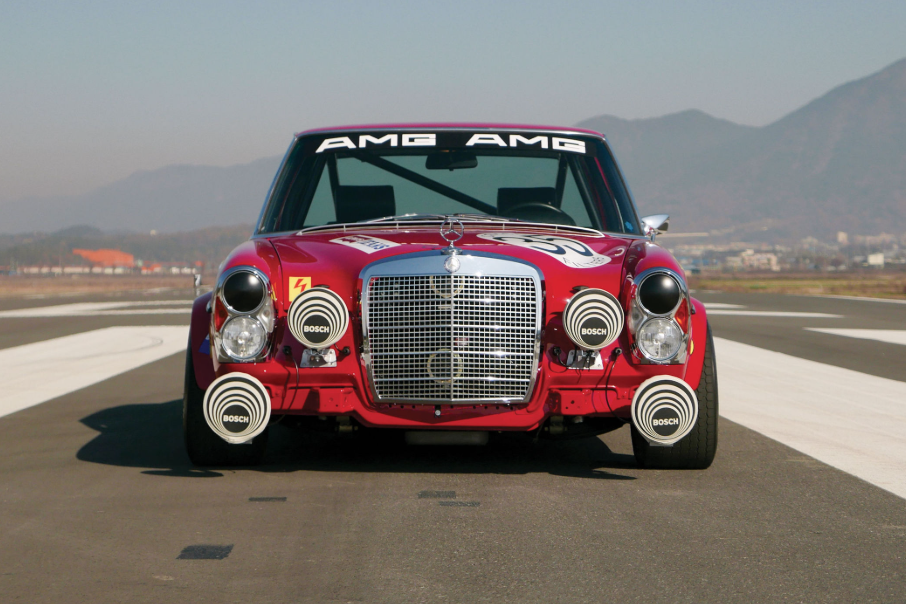
This is the story of the Mercedes-Benz 300 SEL 6.8 AMG, the machine that transformed AMG from a small engineering workshop into a name spoken with authority across motorsport.
It was never supposed to exist.
Officially nicknamed die Rote Sau, the Red Pig, this unlikely racing sedan defied logic. It was large, heavy, and based on a luxury flagship. Yet it became the car that defined AMG’s philosophy: engineering conviction over convention.
The Foundation: The Mercedes-Benz 600 and the M100
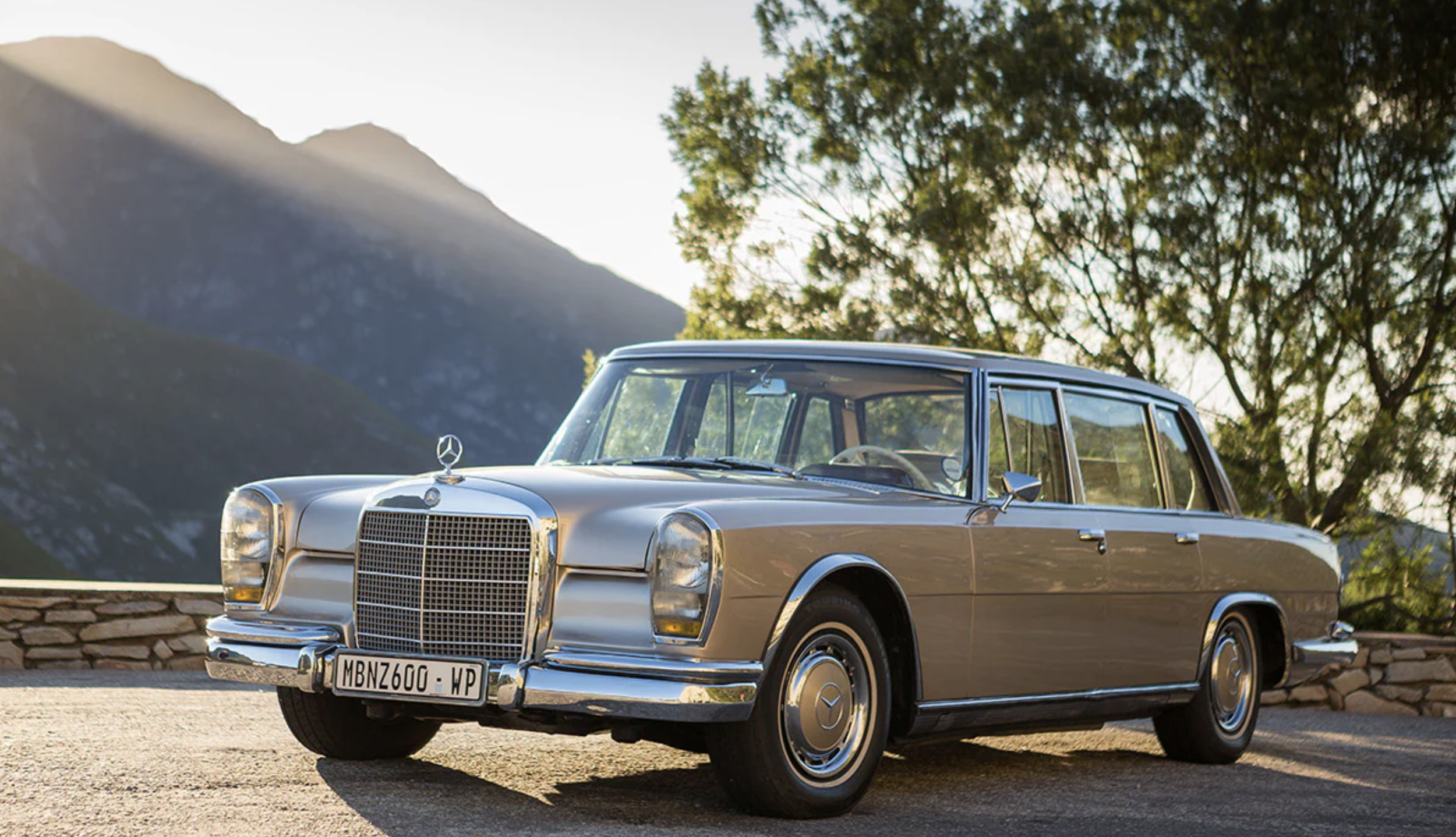
In 1963, at the Frankfurt Motor Show, Mercedes-Benz unveiled the 600, its most ambitious luxury car to date. Available in standard and Pullman configurations, it represented the pinnacle of engineering and prestige.
At its core was the M100 V8, Mercedes’ first production eight cylinder engine. Displacing 6.3 litres and equipped with sophisticated mechanical fuel injection, it produced 247 bhp in smooth, near silent fashion. Each engine was hand built and bench tested extensively before installation.
The 600 was expensive and exclusive, produced in limited numbers. To better leverage the investment in the M100, Mercedes installed it into the smaller W109 chassis, creating the 300 SEL 6.3. On paper, it was a luxury sedan. In reality, it was something far more serious.
A Failed Beginning at Spa
Engineer Erich Waxenberger believed the 300 SEL 6.3 could compete. In 1969, Mercedes prepared three cars for the Spa 24 Hours.
The pace was there. The size was intimidating. But tire failure became a critical issue. Severe chunking on Spa’s punishing circuit forced Mercedes to withdraw before the race even began.
Factory racing ambitions for the W109 quietly ended.
But the idea did not die.
AMG Before It Was AMG
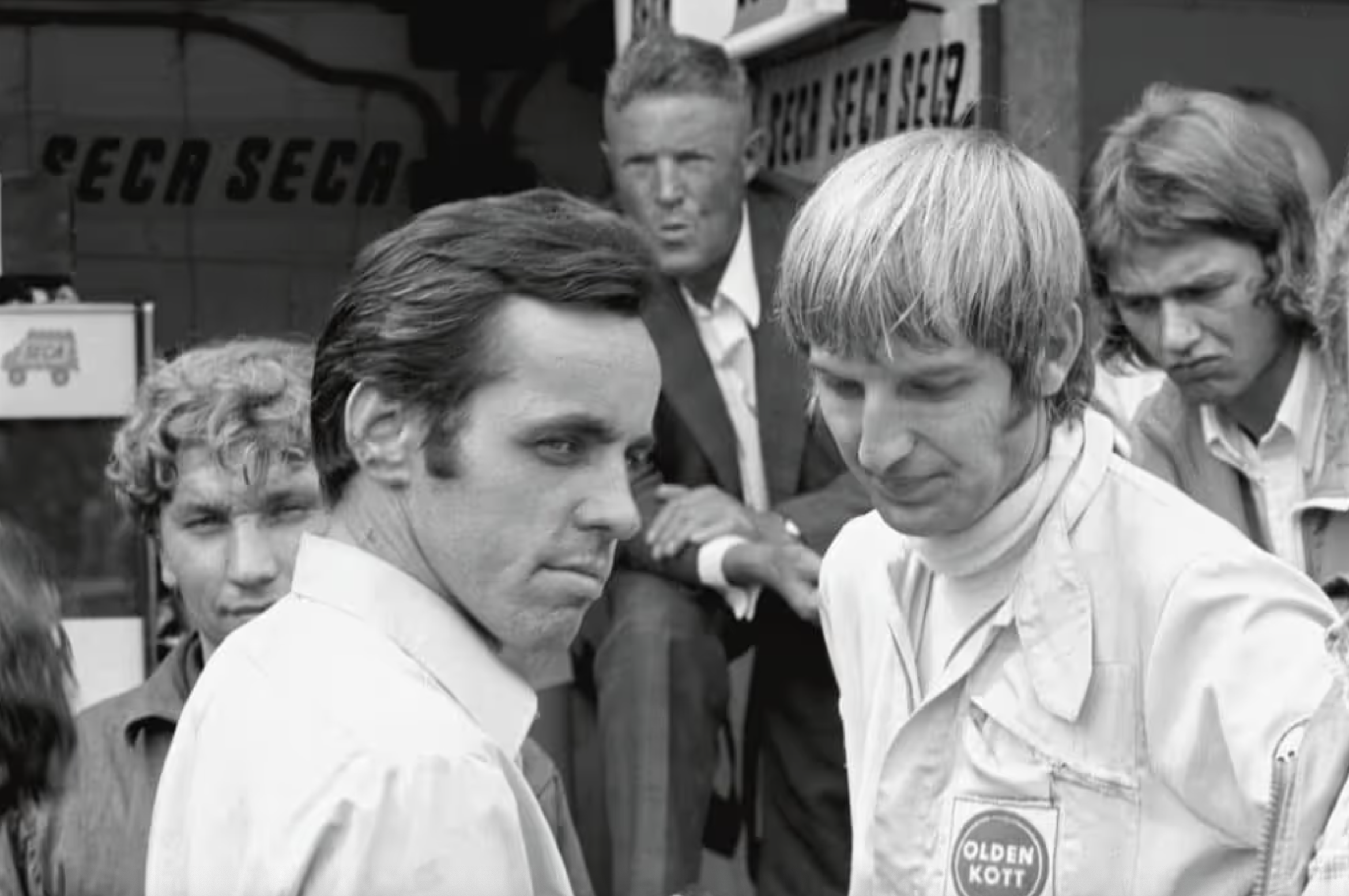
In the late 1960s, AMG was not a brand. It was a small workshop founded by Hans Werner Aufrecht and Erhard Melcher in Burgstall, Germany. They believed Mercedes engines had more potential than the factory was willing to explore.
Their reputation was built through results. Motorsport was about solving mechanical problems, not chasing publicity.
The 300 SEL would become their proving ground.
The Transformation
In 1970, revised Group 2 regulations allowed far greater freedom in modification. AMG saw opportunity where others saw risk.
With discreet factory support, Mercedes supplied a bare W109 bodyshell. AMG reinforced the chassis, installed a roll cage, upgraded the suspension, and homologated dramatically wider wheels to cure the previous tire issues.
The M100 engine was enlarged from 6.3 to 6.8 litres by increasing the bore while retaining the original stroke. Compression was raised. Camshafts were revised. Rotating components were lightened. Fuel injection was recalibrated.
Output jumped from 247 bhp to approximately 428 bhp, with immense torque that reshaped expectations of what a sedan could do.
A five speed manual gearbox replaced the automatic, delivering direct control. The result was a 1,635 kilogram luxury car capable of 0 to 62 mph in just over six seconds and a theoretical top speed approaching 175 mph.
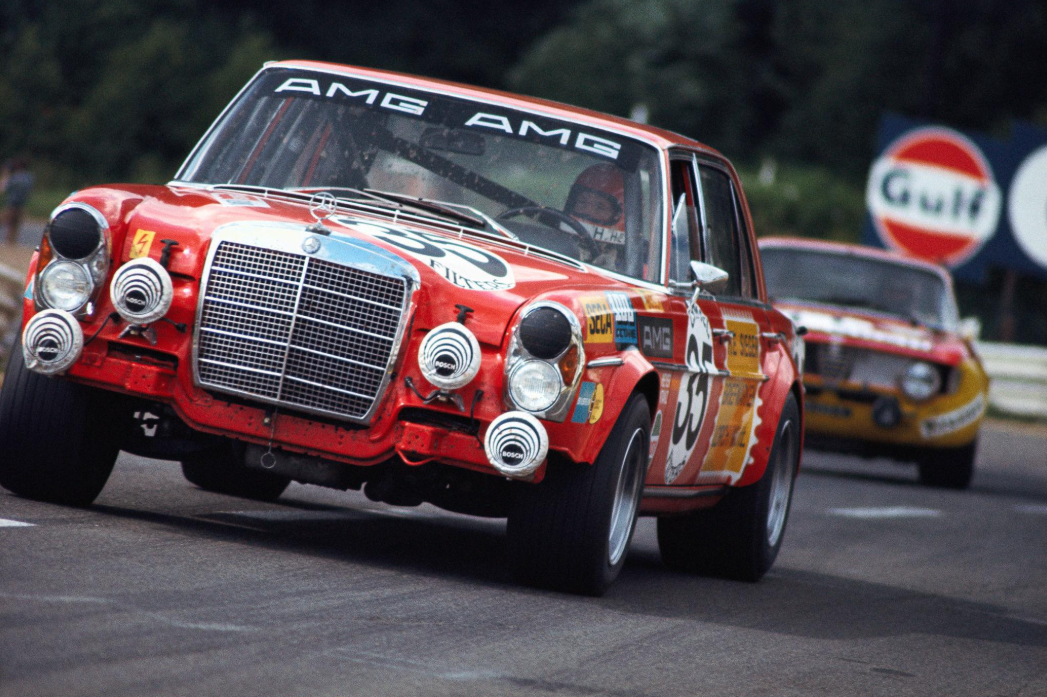
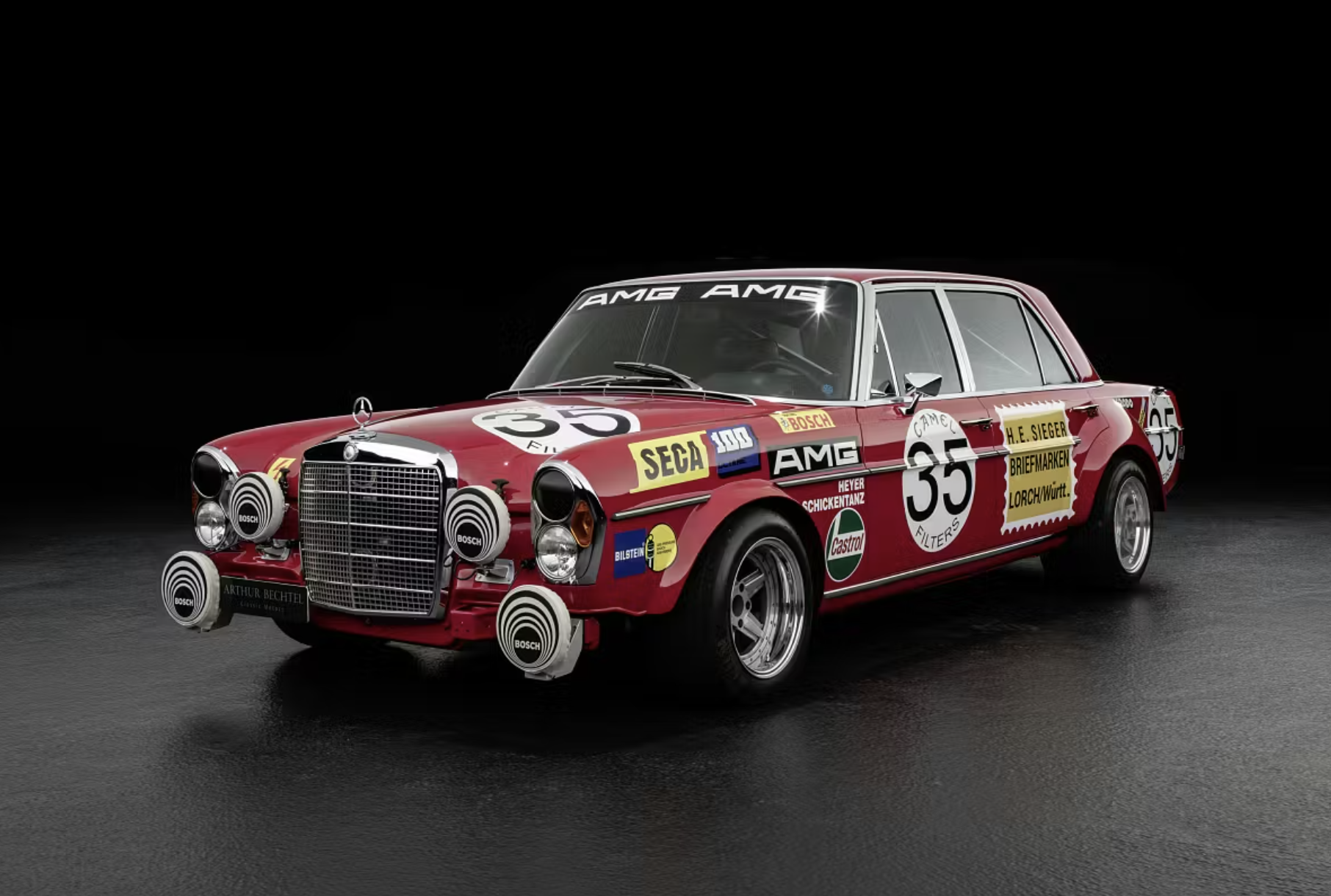
Finished in bright Cardinal Red, with flared arches stretched over massive wheels, the car earned its nickname.
The Red Pig.
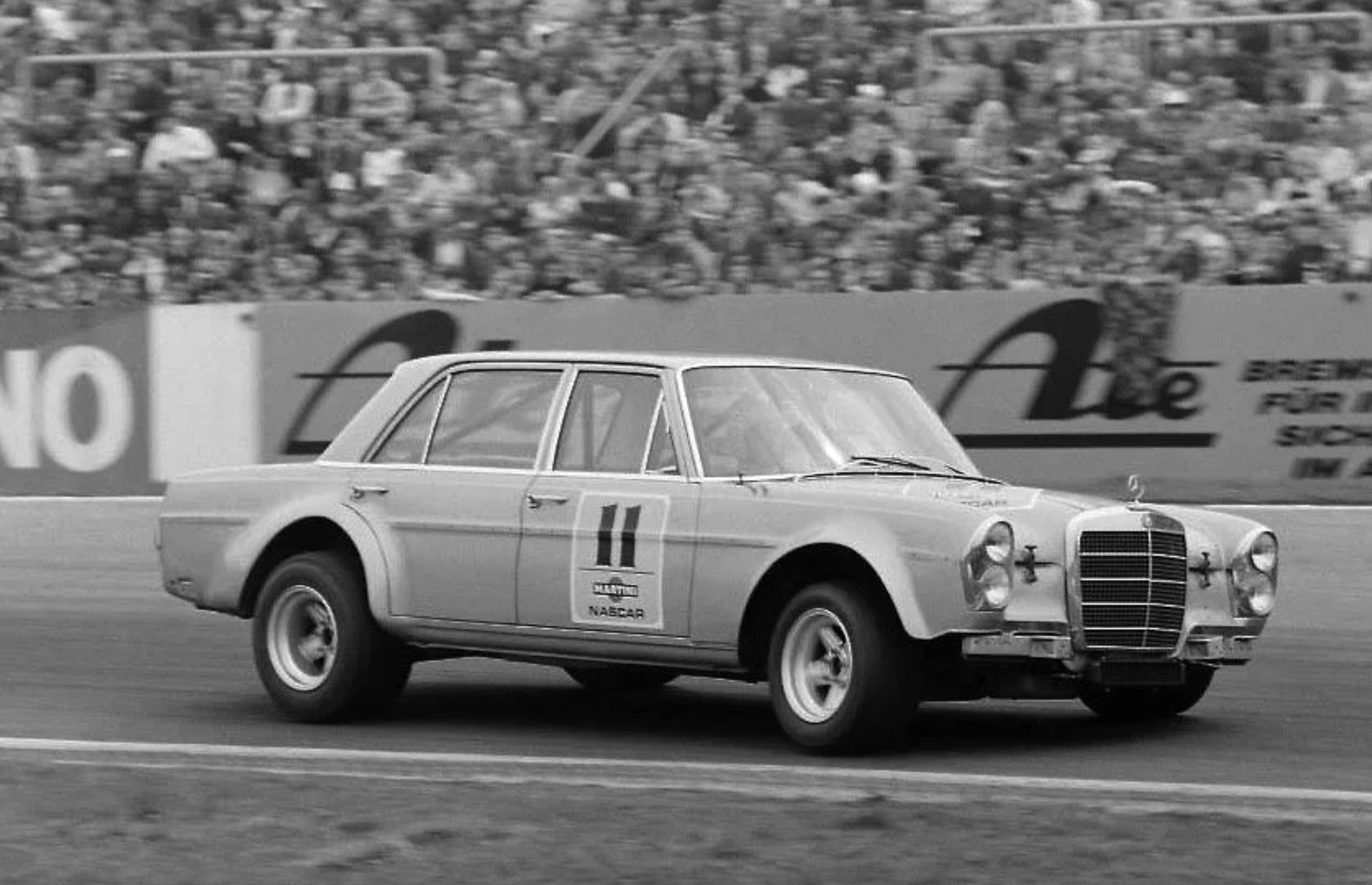
Spa 1971
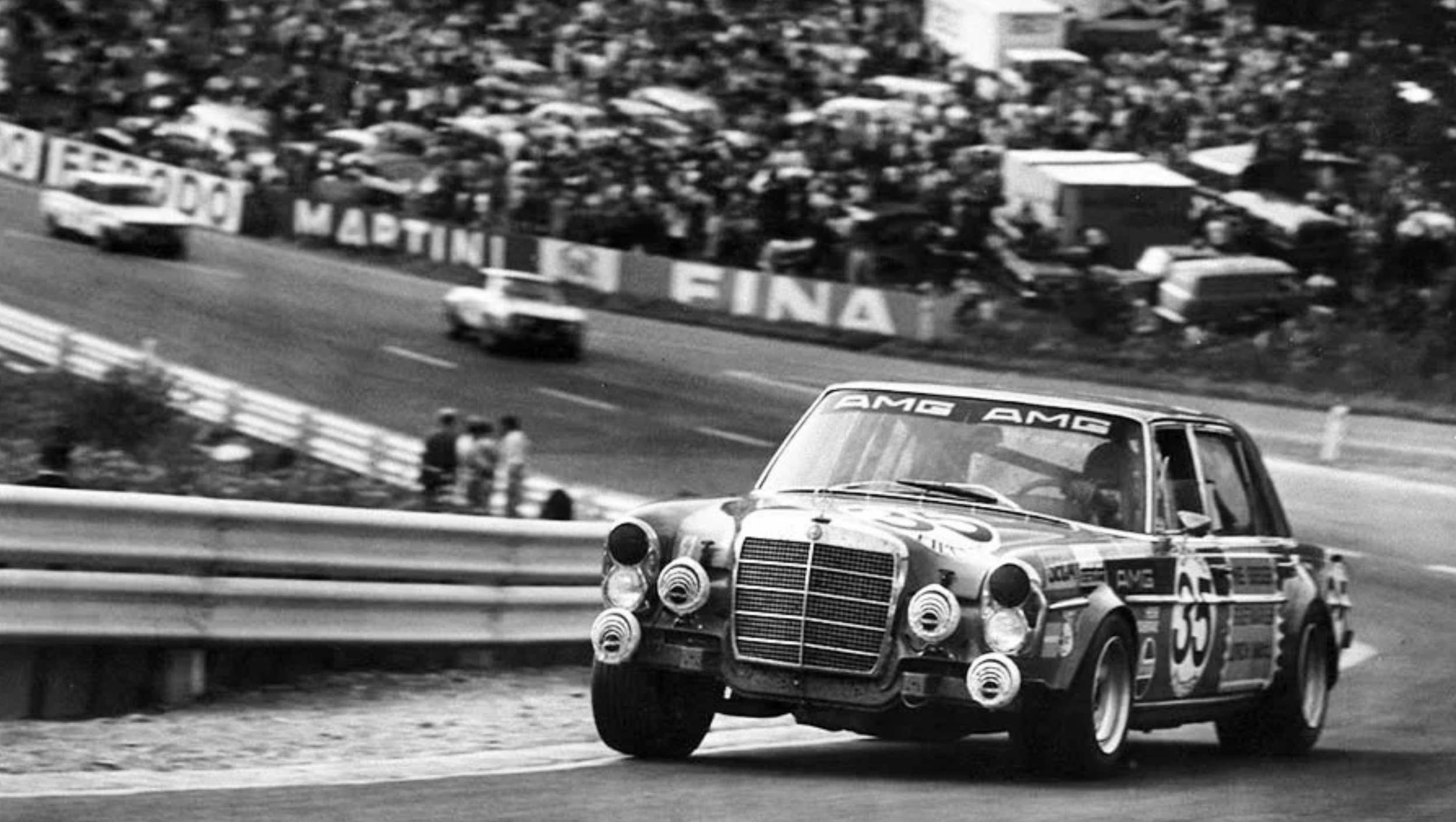
Driven by Hans Heyer and Clemens Schickentanz, the Red Pig entered the 1971 Spa 24 Hours against lighter, purpose built competition.
It finished second overall.
Only the works Ford Capri RS2600 stood ahead of it.
For a full size luxury sedan, the result was extraordinary. It was proof that AMG’s approach, rooted in engineering audacity and mechanical confidence, could compete on the largest stage.
The End and the Aftermath
Regulation changes in 1972 limited engine displacement, effectively sidelining the car. Its final competitive appearance ended in class victory at the Norisring.
Soon after, AMG sold the Red Pig to Matra, where it was converted into a test vehicle for aircraft landing gear. The original race car was eventually lost.
But its legacy was secured.
Why It Still Matters
The Mercedes-Benz 300 SEL 6.8 AMG was not just a race car. It was a declaration.
It proved that AMG was not about badges or image. It was about engineering courage. It was about pushing boundaries without waiting for permission.
Every AMG that followed traces its credibility back to this machine.
The Pig did more than surprise the paddock.
It redefined AMG.
